More than 46% of car seats are used wrong, says the National Highway Traffic Safety Administration. This fact changes everything. The right fit and install can save lives on a simple drive.
This guide is your quick start to making smart choices from birth to booster. It follows AAP car seat recommendations and insights from NHTSA and IIHS. You’ll learn to use infant to booster seats with confidence and support strong child passenger safety habits every day.
We offer real steps for busy families. You’ll get clear talk on seat types, height and weight limits, and when to move up. You’ll see how CPS best practices work in your car, with brands like Britax, Chicco, Graco, Nuna, Clek, Diono, Evenflo, and UPPAbaby. Plus, remember to follow both the seat manual and your vehicle guide.
If you need a car seat buying guide that balances safety, budget, and ease, you’re in the right place. We’ll help you match your child’s size to the right model, install it correctly, and check the fit in seconds before every trip.
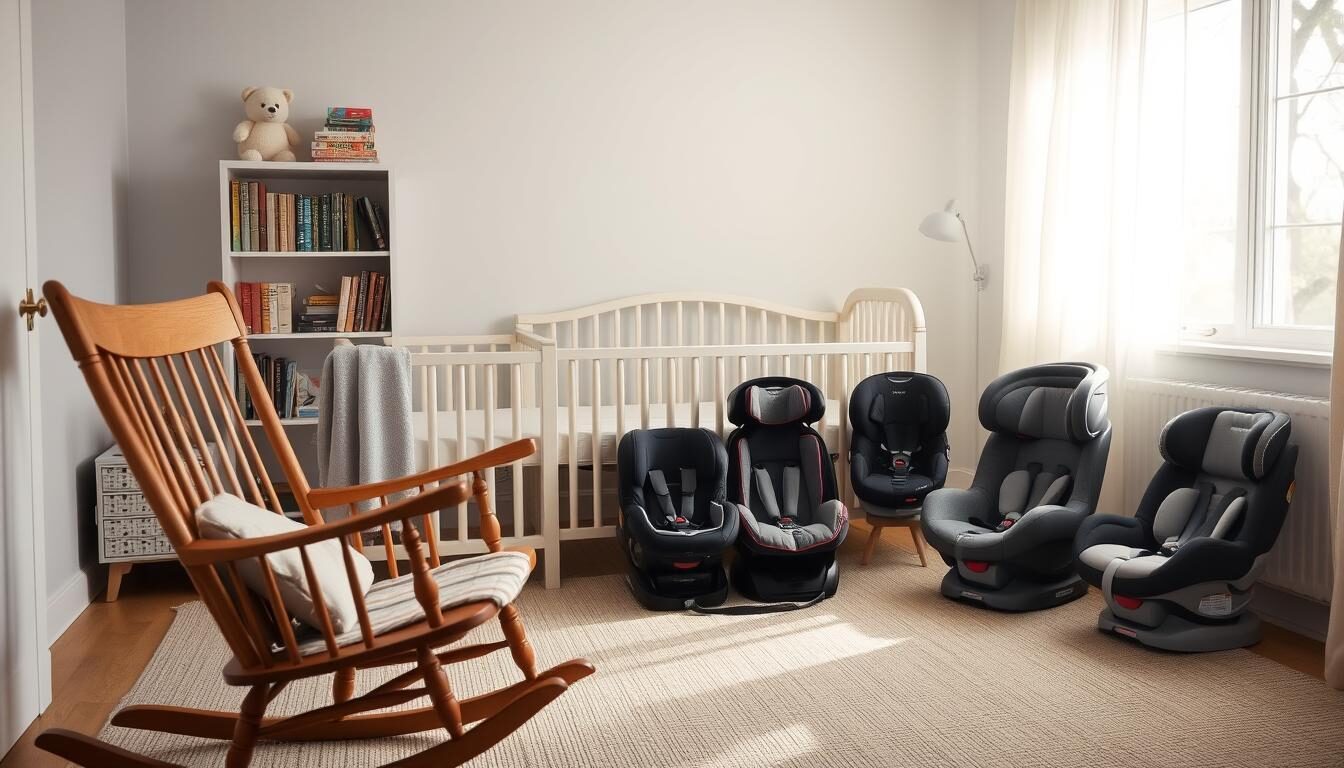
Key Takeaways
- Nearly half of Children Car Seats are misused—proper fit and tight installs save lives.
- This car seat safety guide aligns with AAP car seat recommendations, NHTSA, and IIHS.
- Choose infant to booster seats based on age, height, and weight—not guesswork.
- CPS best practices favor rear-facing as long as possible within seat limits.
- A clear car seat buying guide helps compare features across trusted brands.
- Daily harness checks and correct recline support safer child passenger safety.
Why the Right Car Seat Matters for Every Stage
Crashes show us how energy and timing work together. Kids have bigger heads, softer bones, and growing spines. This affects how crash forces move through their bodies. The right car seat helps by controlling this energy and guiding the seatbelt to safer areas.
Crash dynamics and how seats protect growing bodies
In the rear-facing position, the seat’s shell supports the head, neck, and spine. This spreads crash forces across the back. As kids grow, a forward-facing harness protects the chest and hips.
Boosters lift kids so the seatbelt fits better. This improves side-impact protection. The right seat design matches the child’s growth stage, thanks to child biomechanics.
Good belt routing is key. It reduces loads on the abdomen and neck. IIHS ratings show that accurate belt placement is crucial in boosters.
Common risks from improper fit or installation
Improper use is a big problem. Studies show high misuse rates. This often comes from loose installs, slack harnesses, and moving to forward-facing too soon.
- Check that the seat moves less than one inch at the belt path.
- Keep the chest clip at armpit level and remove bulky coats.
- Use the rear center seating spot when a secure install is possible, and attach the top tether for forward-facing seats.
Smart placement helps with side-impact protection. It’s especially important in narrow vehicles. Consistent habits can lower misuse rates.
U.S. safety standards and recalls to watch
All car seats sold in the U.S. must meet FMVSS 213. This rule sets dynamic testing, labels, and flammability standards. Booster fit is reviewed by the Insurance Institute for Highway Safety.
Stay alert to NHTSA recalls. Register your seat with brands like Graco, Britax, and Chicco. Past recalls have covered buckle performance and label clarity. Follow manuals for airbags, tether use, and seating positions to meet FMVSS 213 standards.
Understanding Car Seat Types and When to Use Them
Choosing the right child’s car seat depends on your child’s size, your car, and how you travel. Think about your daily routine, who will install the seat, and if you need something easy to use or flexible for the long term.
Infant rear-facing only seats: portability and fit
An infant bucket seat is great for newborns. Models like the Chicco KeyFit, UPPAbaby Mesa, and Nuna PIPA come with bases for the car and a carrier that clicks in fast. They also work with stroller travel systems, making it easy to move a sleeping baby.
These seats have infant inserts for a snug fit and may have European belt paths or load legs for extra stability in taxis or other cars. They usually support babies from 4–35 pounds and fit small infants well.
Convertible seats: rear-facing to forward-facing
A convertible car seat starts rear-facing and then turns forward-facing with a harness. Models like the Graco Extend2Fit, Britax Boulevard ClickTight, and Clek Foonf support extended rear-facing. They have strong height limits and advanced install systems like ClickTight and rigid LATCH.
These seats are a good choice for families who don’t need a carrier. They offer fewer transitions and long-term value.
All-in-one seats: convenience vs. compromise
A 3-in-1 car seat is a single purchase that moves from rear-facing to forward-facing to a belt-positioning booster. It can be budget-friendly and saves you from buying multiple seats over time.
However, some all-in-one designs are large, and a few have only fair booster seat belt fit. Check IIHS booster ratings, shoulder belt guide design, and your vehicle’s head restraints before buying.
High-back and backless boosters: belt positioning basics
When a child is ready for a booster, the belt fit is key. The lap belt should be low on the upper thighs, and the shoulder belt should be centered on the collarbone. High-back boosters help route the shoulder belt and provide head support, especially when vehicle head restraints are low.
Backless boosters are compact and easy to move between cars. But they rely on the vehicle seat for head support. In both styles, make sure to check height and weight limits and ensure your child sits calmly and upright on every ride.
Age, Height, and Weight: The Real Rules for Transitioning
Let your child’s body guide you, not just their age. Follow the AAP guidelines and your seat’s limits to know when to move up. Safety depends on fit, not just age.
Rear-facing as long as possible within limits
Keep your child rear-facing as long as the seat allows. This is true for seats from Graco, Britax, Chicco, and Nuna. Many kids stay rear-facing until they are 3 or 4 years old.
It’s time to switch when the head hits the top of the seat or the max weight is reached. Always check the manual for exact measurements and any special rules.
Forward-facing with harness: when and how long
Move to a 5-point harness when rear-facing limits are met. Always use the top tether to reduce head movement. The harness should sit at or above the shoulders, and be snug.
Children usually stay in a harness until they outgrow the seat’s limits. This is often between 5 and 7 years old. Check the seat’s specs before each growth spurt.
Booster readiness: belt fit tests and posture
Before using a booster, check belt readiness with the 5-step test. Your child should sit back, knees bend at the edge, and the lap belt should be low. The shoulder belt should cross mid-shoulder without touching the neck.
If any step fails, go back to a harnessed seat or a high-back booster. This ensures better belt fit and support.
When a child can safely use the vehicle seat belt
Adult belts fit when body size and car geometry match. Many kids pass the test around 8–12 years old and 4’9” (145 cm) tall. But always check belt readiness in every vehicle using the 5-step test.
Reassess after growth spurts or when switching vehicles. Seat depth, cushion angle, and belt anchors can affect fit.
Finding the Right Seat from Cradle to Booster: A Smart Guide for Parents
Start by checking if your car seat fits right at home. Note down your child’s weight, height, and torso length. Then, compare these to the seat’s limits and harness slot heights.
When your child is rear-facing, make sure the shell is at least one inch above their head. Or, follow the seat’s rules for standing height and headrest.
Remember, growth isn’t just about birthdays. If the harness is near the top or the head is close to the shell, it’s time for a change. Make sure the crotch buckle and hip room are snug and comfy.
Fit varies by car as much as by child. Check your car manual for LATCH weight limits. See how many positions are approved. Lower anchor spacing is 11 inches, and many cars ban center LATCH, so check first.
If the child and seat together are too heavy, use a seat belt with a tensioner or lockoff.
Seat contours and fixed head restraints can affect your choice. Some seats, like Britax, use a click-tight install. Try the center spot first for the best protection and fit.
Planning to seat three across? Look for narrow seats like Clek Fllo or Foonf, Diono Radian series, and Graco SlimFit3 LX. Make sure shoulder overlap and buckle access are good for all riders.
Choose a seat that fits your lifestyle. For flights and rideshares, consider lightweight seats like Cosco Scenera Next or WAYB Pico. For grandparents or sitters, look for easy-to-use seats.
Look for features that boost protection and make daily use simple. A no-rethread harness adjusts as kids grow. Clear recline indicators and lockoffs or built-in tensioners help pass the inch test.
Advanced crash management is key. A load leg reduces rotation in frontal crashes, and an anti-rebound bar limits rebound in rear-facing mode. Energy-absorbing foams and easy top-tether access add safety without slowing down.
Before driving, do a fresh car seat fit check and register the seat for recall alerts. Revisit LATCH weight limits as your child grows, and retighten the install when moving the seat between cars.
Installation Essentials: LATCH vs. Seat Belt
Choosing between LATCH and seat belt is the first step to a secure install. Always use one method at a time, unless your car seat manual says otherwise. Many cars don’t allow using the center lower anchors, so check your manuals before starting.
Choosing the correct method for your vehicle and seat
Choose the method that matches your car and your child’s weight. If the child and seat are too heavy for the lower anchors, use the seat belt. If your seat has a lockoff, use it. Otherwise, lock the belt with a switchable retractor or a locking clip.
Achieving a tight install: the inch test
Press down on the belt or LATCH strap, then test the seat. It should not move more than one inch in any direction. Check again after driving and cleaning to keep everything tight.
Recline angles, tether use, and load legs
For rear-facing seats, use the recline indicator to set the angle. Newborns need a deeper angle than older babies. Some seats, like those from Nuna, Cybex, and Britax, have load legs or anti-rebound bars for extra stability.
For forward-facing seats, always use the top tether. It helps prevent head movement in a crash. Make sure to check your vehicle manual for the correct anchor point, as cargo hooks are not the same.
Professional checks: where to find certified technicians
Getting hands-on help is key. Use a CPST locator from Safe Kids Worldwide or the NHTSA to find a certified technician. Many hospitals, fire departments, and clinics offer fitting stations. Bring both manuals so the technician can check your setup.
Harnessing and Fit Checks for Everyday Safety
Start each ride with a quick look and a firm feel. For rear-facing, set the harness height at or just below the shoulders. For forward-facing, keep harness height at or just above the shoulders to hold the torso in place during a stop or crash.
Use the pinch test every time. Tighten the harness, then try to pinch the webbing at the collarbone. If you can grab a fold, tighten more until your fingers slide off the strap. Set the chest clip position at armpit level so it rests on the sternum, not the belly or neck.
Focus on winter coat car seat safety. Skip bulky parkas and snowsuits that add false slack. Dress your child in thin layers or fleece, buckle snugly, then place a warm blanket over the harness. Confirm no twists in the straps and listen for the buckle tongue to click fully into the buckle.
For infants, use only manufacturer-approved inserts for head and body support. Before long drives, check the recline so the head stays clear of a forward slump. In boosters, make sure the shoulder belt slides through the guide and retracts freely, and that the lap belt lies low on the thighs.
Build a simple daily car seat checklist you can repeat: harness height set for the current mode, pinch test passed, chest clip position at armpit level, straps flat and untwisted, buckle secure, and seat angle confirmed. Recheck after a seat cleaning, vehicle detailing, valet service, or when a caregiver notes buckling trouble. Replace any frayed harness or damaged parts per the brand’s instructions from Graco, Britax, Chicco, or Evenflo.

Common Mistakes Parents Make and How to Avoid Them
Small habits can undo big safety gains. Watch for subtle signs of car seat misuse and make quick fixes before every ride. Follow manufacturer instructions and align choices with NHTSA guidance to keep protection on track.
Bulky coats and loose harnesses
Puffy jackets compress in a crash and create dangerous slack. A child can slip under the straps or even be ejected. Dress your child in thin, warm layers, buckle the harness snug, then add a blanket or a coat over the top like a cape.
Use the pinch test at the collarbone. If you can pinch webbing, it’s too loose. Check chest clip height—level with the armpits—to keep the harness on the shoulders.
Forward-facing too soon or booster too early
Many kids turn forward before they should. Rear-facing within seat limits offers superior head and spine protection. Avoid premature booster use; a booster requires maturity to sit upright and a lap belt low on the hips.
Run the five-step check for belt fit in a booster: lap belt low on the thighs, shoulder belt centered on the chest and shoulder, back against the seat, knees bending at the edge, and the child staying in position the whole trip.
Incorrect belt paths and expired seats
Misrouting the belt undermines the install. Use the blue belt path for rear-facing and the red path for forward-facing, as labeled by brands like Graco, Britax, Chicco, and Evenflo. Lock the seat belt or use LATCH as directed, not both unless the manual allows it.
Check for car seat expiration on the shell or label, usually 6–10 years from the manufacture date. Materials age and standards evolve, so replace seats that are beyond their date or missing parts or labels.
After a crash: when to replace your seat
Follow NHTSA guidance and your brand’s manual for post-crash replacement. Many manufacturers call for replacement after moderate or severe crashes. Some allow continued use after a minor crash if all criteria are met: no airbag deployment, the vehicle can be driven, the door nearest the seat is undamaged, no injuries, and no visible damage to the seat.
Document the incident, keep the police or insurance report, and contact customer service for brand-specific direction. When in doubt, replace the seat to avoid hidden damage.
- Key red flags: car seat misuse, premature booster use, car seat expiration, and unclear post-crash replacement steps.
- Quick wins: read the manual cover to cover, match labels to belt paths, and log dates and crash details for accurate guidance.
- Support sources: manufacturer helplines and certified technicians can clarify tricky installs under NHTSA guidance.
Choosing Seats for Special Situations
Life doesn’t always fit into neat boxes. Sometimes, we face tight backseats, last-minute flights, and unique medical needs. We need smart choices that keep kids safe without adding stress. Here are some picks and tactics to help you plan with confidence, keeping safety and practicality in mind.
Fitting three across in compact vehicles
For tight spaces, look for seats with straight sides and low bases. The Clek Fllo or Foonf, Diono Radian series, Graco SlimFit3 LX, and Evenflo EveryFit are good choices. They work well in small cars when installed with the seat belt for more room.
Stagger the seats’ heights to avoid clashes. Remove cupholders if you can. Make sure each buckle is easy to access and do the inch test on every seat. A good install on one seat shouldn’t loosen another.
Travel-friendly options for rideshares and flights
On planes, pick FAA-approved car seats with a harness. Most infant bases are too big, but slim convertibles fit better. The CARES harness is okay for kids 22–44 pounds, but only forward-facing. Don’t check boosters at the gate unless you have to.
For taxis and app rides, choose lightweight seats that are easy to install. The Cosco Scenera Next, Evenflo LiteMax for infants, and WAYB Pico for forward-facing kids are good choices. Practice installing seat belts at home so you can do it fast when you’re in a hurry.
Accommodations for children with special needs
Some kids need more support than regular seats offer. A CPST trained in adaptive transport can find the right seat for a child’s needs. Seats like the Merritt Churchill and Inspired by Drive models offer extra support and comfort.
Keep medical needs in mind and check if there are programs to help with costs. Make sure the vehicle can fit the seat properly, including tether points and space for caregivers.
Hand-me-downs: what’s safe and what’s not
Used car seats are safe if you know their history. Check for any crashes that require a new seat, no recalls, and all parts and labels. Look for the expiration date and check for damage like cracks, frayed straps, or swollen foam.
If the seat’s history is unclear or it’s damaged, don’t use it. Safety is more important than saving money.
| Situation | Recommended Options | Key Tips | Why It Works |
| Three Across in Small Cars | Clek Fllo/Foonf; Diono Radian series; Graco SlimFit3 LX; Evenflo EveryFit | Use seat belt installs; remove cupholders if allowed; stagger seat heights | Slim shells and straight sides make narrow car seats three across achievable without blocking buckles |
| Flights | FAA-approved car seats; CARES harness (22–44 lb, forward-facing only) | Install by the window; avoid infant bases; boosters not allowed in flight | Harnessed restraint or CARES harness maintains proper positioning during turbulence |
| Rideshares & Taxis | Cosco Scenera Next; Evenflo LiteMax; WAYB Pico (forward-facing within limits) | Practice quick seat belt installs; carry a small tote for parts | Lightweight seats speed transfers and reduce install errors under time pressure |
| Special Needs | Merritt Churchill; Inspired by Drive models; consult a CPST with Special Needs | Match features to medical needs; confirm tether points in the vehicle | Special needs car seats provide tailored support for posture, tone, and equipment |
| Hand-me-downs | Only seats with full, clean history and intact parts | Check recalls, expiration, labels, and manual; inspect for damage | Used car seat safety relies on verified history and components that function as designed |
Maintenance, Longevity, and Budget-Smart Buying
Keep your car seat safe by cleaning it right. Don’t use harsh chemicals or machine wash the harness webbing. After a service, always check the recline indicator, load leg, and tether path before driving.
Replace parts with the seat’s maker only. This includes harnesses, buckles, and covers. Keep your seat indoors to avoid damage from heat and UV rays.
Register your warranty to get recall alerts and support. Keep your receipt handy with model and serial number. Make it a habit to check harness tightness and label clarity every month.
Plan for upgrades with a tape measure and a short list. Check harness heights, shell depth, and base fit. Compare IIHS booster ratings and belt fit. Many families use a premium seat daily and a travel seat for flights or rideshares.
Save money with trade-in programs at retailers. Target has events for recycling old seats and offers coupons on new ones. Dispose of crashed or expired seats responsibly and recycle when possible.
Think about the cost-per-year value when buying. A high-limit convertible or a quality all-in-one can last longer than cheaper seats. Calculate purchase price, years of use, and accessories to compare options.
| Buying Path | Typical Lifespan | Key Pros | Watchouts | Estimated Cost-Per-Year Value |
| High-limit convertible (e.g., Graco Extend2Fit) | 7–10 years | Long rear-facing window; tall harness slots; broad fit range | Heavier shell; may need reinstall when switching vehicles | Low to moderate with long use and minimal replacement parts |
| Premium all-in-one (e.g., Britax One4Life) | 10 years | One seat from toddler to booster; strong crash performance features | Higher upfront price; confirm booster belt fit in your car | Low when used across stages and verified for booster fit |
| Value convertible + travel seat (e.g., Evenflo Sureride + Cosco Scenera Next) | 6–8 years | Lower upfront cost; light backup for flights and rideshares | Shorter harness height; fewer comfort features | Moderate; improves with trade-in programs at upgrade time |
| Dedicated booster after harnessed seat (e.g., Chicco KidFit) | 6–8 years (booster phase) | Good belt guidance; often slim for carpools | Requires mature posture; check IIHS rating for your vehicle | Low if harnessed phase already maximized |
Quick checklist:
- Follow car seat cleaning rules in the manual; avoid fiber damage.
- Order replacement parts from the maker; keep model and serial handy.
- Finish warranty registration and save the receipt for service and recalls.
- Use trade-in programs to recycle old seats and reduce upgrade costs.
- Compare cost-per-year value before buying, not just sticker price.
Conclusion
Choosing the right car seat is key from the start. It should fit your child’s size and your car. Always keep kids in the back facing forward until they outgrow it.
Then, use a booster seat until they can wear an adult seatbelt. This ensures safe travel for kids on every trip.
Make safety a daily habit. Check the car seat before driving. Ensure it’s tight, the recline is right, and the harness fits snugly.
These steps boost your confidence and keep your child safe. If the seat moves too much, it’s time to recheck the install.
Stay updated with safety advice. The American Academy of Pediatrics and NHTSA offer great tips. Register your seat and keep it in good shape for all seasons.
If you’re unsure, get help from a certified Child Passenger Safety Technician. With the right seat and care, your family will stay safe and confident.
FAQ
How do I choose the right car seat for my child’s age, height, and weight?
Start by checking your child’s current measurements. Compare them to the car seat’s height and weight limits. Make sure the harness slots are at the right height for rear-facing, or follow the standing height rules for forward-facing.
Also, check your vehicle’s manual for the right seating positions and LATCH availability. Look for brands like Britax, Chicco, Graco, Nuna, Clek, Diono, Evenflo, and UPPAbaby. They have detailed fit charts to help you choose.
Why is rear-facing safer, and how long should my child stay rear-facing?
Rear-facing supports the head, neck, and spine, spreading crash forces across the back. The American Academy of Pediatrics recommends keeping kids rear-facing until they hit the seat’s height or weight limit. Many convertible seats allow rear-facing up to 40–50 lb and into ages 3–4.Legs touching the seatback are not a safety issue.
When should we switch to a forward-facing harness?
Move to forward-facing only after your child maxes out rear-facing limits. Use a 5-point harness with the straps at or above the shoulders. Always attach the top tether. Kids often stay harnessed until 5–7 years old, depending on maturity and seat limits.
How do I know my child is ready for a booster?
Use the 5-step test: sit back against the vehicle seat, knees bend at the edge, lap belt lies low on the thighs, shoulder belt crosses mid-shoulder (not the neck), and the child can maintain this posture for the whole ride. Check IIHS “Best Bet” booster ratings for belt fit guidance.
When can a child use the vehicle seat belt without a booster?
Most kids fit an adult belt between ages 8–12 and around 4’9” tall, but vehicle seat geometry varies. Prioritize proper belt fit over age. The lap belt must sit on the upper thighs and the shoulder belt centered on the collarbone.
What are the differences between infant seats, convertibles, all-in-ones, and boosters?
Infant rear-facing seats offer portability and bases, often 4–35 lb, with models like Chicco KeyFit, UPPAbaby Mesa, and Nuna PIPA. Convertibles start rear-facing and later turn forward-facing with a harness; examples include Graco Extend2Fit, Britax Boulevard ClickTight, and Clek Foonf. All-in-ones cover cradle-to-booster but may be bulkier—verify booster belt fit and IIHS ratings. Boosters (high-back and backless) position the lap and shoulder belt correctly.
Is LATCH or the seat belt safer for installation?
Both are equally safe when used correctly. Use one method unless your seat allows both (rare). Follow vehicle and car seat manuals. If the child plus seat exceeds a lower anchor limit, switch to a seat belt install. Use lockoffs, a locking retractor, or a locking clip as directed for a secure setup.
How tight should the installation be?
Perform the inch test at the belt path. The seat should not move more than 1 inch side-to-side or front-to-back. Recheck after vehicle service, cleaning, or when another caregiver installs the seat.
What recline angle should I use for rear-facing?
Use the seat’s bubble or line level. Newborns need a more reclined angle to protect the airway; older babies can be more upright within the allowed range. Confirm before long drives to prevent head slump.
Do I need to use the top tether for forward-facing?
Yes. Always attach the top tether to reduce head movement in a crash. Locate the correct anchor point in your vehicle manual and route the tether exactly as shown in the seat manual.
Are load legs and anti-rebound bars worth it?
These features can enhance stability and energy management in certain crashes. Load legs appear on bases from brands like Nuna, Cybex, and Britax; anti-rebound bars are found on several convertibles. Use them if your vehicle allows.
How do I set the harness correctly every day?
Straps at or below the shoulders for rear-facing; at or above for forward-facing. Tighten until the pinch test passes at the collarbone. Place the chest clip at armpit level and remove bulky coats. Use only manufacturer-approved inserts.
What are the most common mistakes parents make?
Loose harnesses, bulky winter coats, using the wrong belt path, turning forward-facing too soon, and moving to a booster before a child is ready. Also watch for expired seats and unregistered products that may miss recall alerts.
How do I check for recalls and safety standards?
U.S. seats must meet FMVSS 213. Register your seat with the manufacturer and monitor NHTSA’s recall database. IIHS publishes booster evaluations. If you find a recall, follow the brand’s repair or replacement instructions promptly.
What should I do after a crash?
Follow the manufacturer’s crash policy and NHTSA guidance. Many brands require replacement after moderate or severe crashes. Some allow continued use after a minor crash if strict criteria are met. Document the incident and contact customer service with model and serial numbers.
How can I fit three car seats across in a small car?
Choose narrow, straight-sided models like Clek Fllo/Foonf, Diono Radian, and Graco SlimFit3 LX. Seat belt installs often give more space than lower anchors. Stagger positions and remove cupholders if allowed to improve clearance.
What are good travel options for flights and rideshares?
For planes, look for FAA-approved harnessed seats; many convertibles fit well. The CARES harness works for 22–44 lb forward-facing only. Boosters cannot be used on aircraft. For rideshares, consider lightweight seats like Cosco Scenera Next, Evenflo LiteMax, or WAYB Pico (forward-facing within limits) and practice fast seat belt installs.
How do I handle special needs or medical accommodations?
Work with a Child Passenger Safety Technician with Special Needs training. Specialized solutions like Merritt Churchill or Inspired by Drive may help. Your state or hospital may offer funding or loaner programs. Always match equipment to your child’s medical and behavioral needs.
Are hand-me-down car seats safe?
Only if you know the full history: no qualifying crashes, no recalls, all parts present, within expiration, and no damage. Avoid seats with unknown history or missing manuals. Verify the manufacture date and check for cracks, frayed harnesses, or altered labels.
How can I keep costs down without compromising safety?
Time purchases with retailer trade-in events like Target’s programs. Compare cost per year of use; a high-limit convertible or quality all-in-one may be economical long-term. Consider a premium primary seat and a low-cost secondary seat for travel. Always register your seat for warranty and recall support.
What maintenance keeps a seat safe over time?
Clean only as the manual allows. Do not machine wash harness webbing unless permitted. Replace parts with manufacturer components only. Store out of heat and sun, check tightness often, and confirm recline indicators and load legs after service or detailing.
How do I find a certified technician to check my installation?
Locate a CPST through Safe Kids Worldwide or NHTSA’s inspection station finder. Some hospitals, fire departments, and community events host fitting stations. Bring your vehicle and car seat manuals to the appointment.
Which features truly improve ease of use and safety?
Look for no-rethread harnesses, clear recline indicators, built-in lockoffs, strong top-tether access, rigid LATCH or tensioning systems like Britax ClickTight, load legs, anti-rebound bars, and EPP/EPS energy-absorbing foam. Good design reduces misuse and improves daily consistency.
Can I install a car seat in the rear center position?
Often yes, and it’s frequently the safest spot if you can achieve a rock-solid install. Many vehicles do not allow center LATCH; a seat belt install may be required. Verify in your vehicle manual and the car seat manual before choosing the center.
Facebook Comments